
Guide
Missile Defense RF Shielding: Design and Manufacturing Guide
When your systems operate in milliseconds and failures are measured in lives, RF shielding is not just a design consideration; it is the foundation of performance where signal integrity cannot be compromised.
Download PDF![[hero] Missile Defense RF Shielding Design and Manufacturing Guide](https://www.modusadvanced.com/hs-fs/hubfs/%5Bhero%5D%20Missile%20Defense%20RF%20Shielding%20Design%20and%20Manufacturing%20Guide.png?width=1024&height=768&name=%5Bhero%5D%20Missile%20Defense%20RF%20Shielding%20Design%20and%20Manufacturing%20Guide.png)
Table of Contents
Table of Contents
Key Points
- Missile defense systems face severe EMI/RF threats from both environmental electromagnetic noise and deliberate electronic warfare (EW) attacks, making missile defense RF shielding a mission-critical design requirement — not an afterthought.
- Guidance system shielding demands multi-layered protection across radar seekers, inertial navigation units, and datalink receivers, each with unique frequency ranges and attenuation requirements.
- Material selection must account for extreme operational environments including temperatures ranging from --55°C (--67°F) to 200°C (392°F), severe vibration profiles, and exposure to jet fuel and military-grade chemicals.
- Form-in-place (FIP) gaskets offer superior EMI sealing for the small, intricate compartmentalized enclosures common in missile electronics — but bead path design and material selection require specialized manufacturing expertise.
- Vertically integrated manufacturing reduces risk and lead time for RF shield sub-assemblies that require CNC machining, plating, FIP dispensing, and the assembly of absorber or thermal materials.
Don't have time to read this? Take a copy with you:
Download PDF- 1When Milliseconds and Decibels Both Matter
- 2The EMI/RF Threat Landscape in Missile Defense
- 3Guidance System Shielding for Critical Missile Components
- 4Material Selection for Missile Defense RF Shielding in Extreme Environments
- 5Nickel-aluminum Moderate Moderate Reasonable SE at moderate cost
- 6FIP Gasket Design for Missile Defense Enclosures
- 7Start/stop zone variation --30% to +45% of nominal height Within 3 mm of any start, stop, or T-joint
- 8Testing, Compliance, and Qualification for Missile Defense RF Shielding
- 9MIL-STD-889 Dissimilar metals Galvanic corrosion prevention at metal-to-metal and metal-to-gasket interfaces
- 10Design for Manufacturability: RF Shields That Perform and Can Be Built
- 11Why the Right Manufacturing Partner Matters
- 12Designing Your Missile Defense RF Shield: A Practical Reference
- 13Frequently Asked Questions About Missile Defense RF Shielding
- 14Accelerating Missile Defense Innovation with Modus Advanced
- 15Glossary of Key Terms
- 16Download this Guide
- 1When Milliseconds and Decibels Both Matter
- 2The EMI/RF Threat Landscape in Missile Defense
- 3Guidance System Shielding for Critical Missile Components
- 4Material Selection for Missile Defense RF Shielding in Extreme Environments
- 5Nickel-aluminum Moderate Moderate Reasonable SE at moderate cost
- 6FIP Gasket Design for Missile Defense Enclosures
- 7Start/stop zone variation --30% to +45% of nominal height Within 3 mm of any start, stop, or T-joint
- 8Testing, Compliance, and Qualification for Missile Defense RF Shielding
- 9MIL-STD-889 Dissimilar metals Galvanic corrosion prevention at metal-to-metal and metal-to-gasket interfaces
- 10Design for Manufacturability: RF Shields That Perform and Can Be Built
- 11Why the Right Manufacturing Partner Matters
- 12Designing Your Missile Defense RF Shield: A Practical Reference
- 13Frequently Asked Questions About Missile Defense RF Shielding
- 14Accelerating Missile Defense Innovation with Modus Advanced
- 15Glossary of Key Terms
- 16Download this Guide
Table of Contents
Select Your Chapter
Chapter 1
When Milliseconds and Decibels Both Matter
Missile defense RF shielding is the practice of protecting an interceptor's sensitive electronics from electromagnetic interference (EMI) and radio frequency interference (RFI) using conductive enclosures, gaskets, absorbers, and surface treatments. These shielding assemblies prevent signal degradation that could cause guidance failures, communication disruption, or unintended fuzing actuation — failures measured in lives lost and threats unmitigated.
Modern missile defense is a game of speed and precision. An interceptor has fractions of a second to acquire a target, compute a solution, and execute a maneuver. Every subsystem — from the phased-array seeker to the mid-course guidance processor — depends on clean electromagnetic signals to function. The EMI shielding challenges specific to phased array radar systems illustrate just how demanding these requirements can be.
EMI and RFI can degrade those signals. In a consumer device, degraded signals cause frustration. In a missile defense system, they can cause failure. That reality makes RF shielding one of the highest-stakes design challenges in defense electronics.
This guide covers the EMI/RF challenges specific to missile defense, the shielding requirements for guidance and tracking systems, material selection for extreme environments, FIP gasket design considerations, testing and compliance requirements, and what to look for in a manufacturing partner. The goal is to give RF engineers, electrical engineers, and design engineers a comprehensive reference for designing shielded assemblies that perform under the most demanding conditions on earth — and above it.
.jpg?width=1200&height=627&name=8%20RF%20Shielding%20Techniques%20to%20Know%20About%20(1).jpg)
Related
The Benefits of Vertical Integration
Find out how vertical integration can improve part quality and reduce lead times.
See HowChapter 2
The EMI/RF Threat Landscape in Missile Defense
Understanding the electromagnetic threats a missile defense system will face is the first step toward designing effective shielding. These threats come from multiple directions, and they don't politely take turns.
Intentional vs. Incidental Interference
Missile defense systems operate in some of the most electromagnetically congested environments imaginable. The sources of interference generally fall into two categories.
Intentional interference includes electronic warfare (EW) and electronic countermeasures (ECM) — deliberate attempts to jam, spoof, or disrupt a system's sensors and communications. Adversaries actively target missile defense radar and guidance frequencies with high-power jamming signals. Shielding must be robust enough to maintain system function even when hostile RF energy is directed at the platform.
Incidental interference comes from the system's own electronics, co-located systems on the same platform, or the broader electromagnetic environment. Radar transmitters, power supplies, motor controllers, and communication systems all generate EMI that can couple into sensitive receiver circuits. A missile defense interceptor may carry multiple RF-emitting and RF-sensitive subsystems in very close proximity, making internal EMI management critical.
Frequency Ranges of Concern
Missile defense systems operate across a wide swath of the electromagnetic spectrum. Effective missile defense RF shielding must address multiple frequency bands simultaneously.
The following table outlines the primary frequency ranges relevant to this challenge:
Subsystem | Typical Frequency Range | Shielding Concern |
Search and acquisition radar | 1–18 GHz (L-band through Ku-band) | High-power transmit/receive isolation |
Active seeker (terminal guidance) | 10–40 GHz (X-band through Ka-band) | Ultra-sensitive receiver protection |
Datalink communications | 225 MHz–5.0 GHz (UHF through C-band) | Jam-resistant communication integrity |
Inertial navigation unit (INU) | Susceptible to broadband EMI | Isolation from internal power electronics |
Fuzing systems | Varies widely by design | Prevention of unintended actuation |
GPS receivers | 1.2–1.6 GHz (L-band) | Low-signal-strength susceptibility |
The wide frequency range — from hundreds of megahertz through tens of gigahertz — means that a single shielding approach is rarely sufficient. Designers typically need to combine conductive enclosures, conductive gaskets, RF absorbers, and careful cable routing to achieve adequate isolation across all relevant bands.
Shielding Effectiveness Requirements
The required shielding effectiveness (SE) for missile defense components is significantly higher than for commercial or even standard military electronics. Commercial electronics might require 20--40 dB of SE. Missile defense subsystems often demand 60--100+ dB depending on the application and the sensitivity of the protected circuit.
SE is measured in decibels (dB) and represents the ratio of incident RF energy to the energy that passes through the shield. Every 20 dB of SE represents a factor-of-100 reduction in signal strength. At 80 dB, an interfering signal is reduced by a factor of 100 million. Achieving — and maintaining — this level of performance over temperature extremes, vibration, and years of service is no small feat.
Capabilities
Review all of Modus's Manufacturing Capabilities
See the full breadth of custom manufacturing services we can offer.
CapabilitiesChapter 3
Guidance System Shielding for Critical Missile Components
Missile guidance systems are the brains of the interceptor. They integrate data from multiple sensors, compute trajectories, and issue steering commands — all in real time. Guidance system shielding must address the distinct electromagnetic sensitivity of each subsystem based on its function. For gasket-specific design considerations in these assemblies, see our guide to custom RF gasket design for missile guidance systems.
Radar Seekers and Radar EMI Shielding
Radar seekers are simultaneously the most RF-active and the most RF-sensitive components in a missile defense system. The seeker transmits high-power radar pulses through its antenna while receiving extremely faint return echoes from the target. Effective radar EMI shielding must address both the high-power transmit path and the ultra-sensitive receive path within the same assembly.
Shielding for radar seekers must accomplish two tasks that seem contradictory: allow RF energy to pass freely through the radome and antenna aperture while preventing it from leaking into adjacent electronics compartments. This is achieved through careful compartmentalization — physically isolating the RF front-end from the digital processing sections with shielded bulkheads and conductive gaskets at every interface.
The seeker housing itself typically serves as the primary radar EMI shielding barrier. CNC-machined aluminum or beryllium copper enclosures provide structural integrity and RF containment simultaneously. Internal compartment walls further subdivide the electronics to prevent cross-talk between the transmitter, receiver, and signal processing sections. For a closer look at the gasketing challenges unique to these assemblies, see our guide to FIP gaskets for missile seeker housings.
Inertial Navigation and GPS Receivers
Inertial navigation units (INUs) and GPS receivers require a different guidance system shielding strategy than radar seekers. These subsystems don't transmit — they only receive or measure — which makes them purely susceptible to interference without contributing to the problem.
INUs rely on accelerometers and gyroscopes that are sensitive to electromagnetic fields. Broadband EMI from adjacent power electronics or motor controllers can introduce measurement errors. The shielding approach for INUs focuses on providing a quiet electromagnetic environment inside the enclosure, which typically means high-SE conductive enclosures with well-sealed gasket interfaces.
GPS receivers present a unique challenge because their signals arrive from satellites at extremely low power levels — often below the ambient noise floor. Even modest interference can disrupt GPS lock. The shield must block interference from internal and external sources while allowing the GPS antenna to maintain line-of-sight to the satellite constellation through a carefully designed aperture.
Datalink and Communication Electronics
Datalink systems allow the missile to receive mid-course guidance updates from external platforms such as ships, ground stations, or aircraft. These communication links operate in frequency bands that are targeted by adversary jamming systems.
Shielding for datalink electronics serves a dual purpose: preventing internal EMI from degrading receiver sensitivity, and providing a baseline level of protection against external RF energy that enters the missile body through seams, connectors, and cable penetrations. Conductive gaskets at enclosure interfaces and shielded cable assemblies are essential elements of this protection strategy.
Fuzing and Safety-Critical Electronics
Fuzing electronics deserve special mention because the consequences of EMI-induced failure are uniquely severe. An unintended detonation — or a failure to detonate at the correct moment — can have catastrophic consequences.
MIL-STD-461 and other applicable standards impose stringent EMI requirements on fuzing systems. Shielding must be verified to prevent inadvertent actuation across a wide range of frequencies and power levels. The shielding solution typically involves a dedicated, heavily shielded enclosure with filtered connectors and minimal apertures.
Chapter 4
Material Selection for Missile Defense RF Shielding in Extreme Environments
Missile defense systems operate in some of the harshest environments any electronic system will encounter. Shielding materials must maintain their electromagnetic and mechanical performance across that entire envelope.
Environmental Requirements
The operational environment for missile defense electronics spans a punishing range of conditions. Designers must account for all of the following simultaneously.
- Temperature extremes: Storage temperatures can range from –55°C (–67°F) to 85°C (185°F), while operating temperatures during flight can push well beyond 200°C (392°F) on external surfaces due to aerodynamic heating. Shielding materials — particularly gasket materials — must maintain their conductivity, compression set resistance, and adhesion across this range.
- Vibration and shock: Launch, boost, and maneuvering phases impose severe mechanical loads on shielded enclosures and their gaskets. Random vibration profiles per MIL-STD-810 are standard qualification requirements. Gaskets must maintain seal integrity and electrical contact under sustained vibration without fretting, fatiguing, or working loose.
- Chemical exposure: Jet fuel, hydraulic fluid, de-icing compounds, and various cleaning solvents are all common in missile defense environments. Materials used in missile defense RF shielding must be compatible with the chemical environment specified in the system's environmental qualification requirements.
Housing Materials for RF Shield Enclosures
The metal enclosure forms the primary RF shield. Material selection depends on the balance of shielding effectiveness, weight, machinability, and corrosion resistance required for the specific application.
Material | Advantages | Limitations | Typical Use |
6061 Aluminum | Lightweight, excellent machinability, good SE | Lower conductivity than copper, galvanic corrosion risk | Primary enclosures, bulkheads |
Beryllium copper | High conductivity, spring properties, good SE | Higher cost, machining complexity | Connector interfaces, spring contacts |
Stainless steel | High strength, corrosion resistance | Heavy, lower conductivity | Structural shields, high-temp areas |
Nickel silver (copper alloy) | Good SE, corrosion resistance | Moderate cost | Compartment dividers |
Aluminum — specifically 6061 alloy — is the most common housing material for missile defense RF enclosures due to its favorable strength-to-weight ratio and machinability. Standard CNC machining tolerances of ±0.25 mm (±0.010") are achievable for these enclosures. Tighter tolerances are possible through advanced fixturing and tooling strategies, though this increases both lead time and cost. Tolerances should only be tightened beyond standard when the design or mating interface truly requires it.
Conductive Platings and Coatings
Bare aluminum does not always provide sufficient conductivity or corrosion resistance at enclosure interfaces. Conductive platings and coatings enhance both shielding performance and environmental durability.
Common plating options for missile defense RF shielding enclosures include:
- Electroless nickel: Provides uniform coverage on complex geometries and good corrosion resistance. Typical for general-purpose RF enclosures.
- Tin plating: Offers excellent solderability and good corrosion protection. Common on connectors and mating surfaces.
- Silver plating: Delivers the highest conductivity and best RF performance, but tarnishes without a protective topcoat. Used where maximum SE is required.
- Chromate conversion (Alodine): A cost-effective treatment that maintains aluminum's conductivity while improving corrosion resistance. Often used as a baseline treatment.
- Conductive chromate (per MIL-DTL-5541, Type I): Specifically designed to maintain electrical conductivity at mating surfaces — critical for gasket-to-housing contact.
The choice of plating directly affects the shielding effectiveness at gasket interfaces. A gasket can only be as effective as the conductivity of the surface it seals against. Specifying a conductive plating at gasket mating surfaces is a critical — and sometimes overlooked — design detail.
Conductive Gasket Materials
Gaskets fill the gaps between mating surfaces in a shielded enclosure. In missile defense applications, these gaskets must be electrically conductive to maintain shielding continuity at seams, covers, and access panels.
Conductive gaskets are typically made from a silicone or fluorosilicone elastomer base filled with conductive particles. The filler material determines the gasket's electrical and shielding properties.
Filler Material | Shielding Effectiveness | Relative Cost | Key Characteristics |
Silver-copper | Very high (>100 dB achievable) | High | Best overall SE, good in harsh environments |
Silver-aluminum | High | Moderate-high | Good SE, lighter weight |
Nickel-graphite | Moderate (60–80 dB typical) | Low-moderate | Cost-effective, good for less demanding applications |
Silver-nickel | High | Moderate-high | Good balance of SE and corrosion resistance |
Nickel-aluminum | Moderate | Moderate | Reasonable SE at moderate cost |
Chapter 5
Nickel-aluminum Moderate Moderate Reasonable SE at moderate cost
Silver-based fillers are the standard choice for missile defense applications requiring high SE. Nickel-graphite fillers can be appropriate for lower-criticality compartment dividers or secondary shielding layers where the SE requirement is less demanding. For space-based interceptor applications, material selection carries additional constraints — our space-qualified conductive gaskets material selection guide addresses outgassing and other orbital requirements.
The base elastomer also matters. Fluorosilicone is preferred in applications with exposure to jet fuel and hydrocarbon solvents, while standard silicone is adequate for most sealed-compartment applications. Both are available with the conductive fillers listed above.
RF Absorber Materials
Shielding alone — reflecting RF energy — can sometimes create standing waves or resonance effects inside a compartmentalized enclosure. RF absorbers address this by converting RF energy to heat rather than reflecting it.
Absorber materials are commonly added to the interior surfaces of shielded compartments in missile guidance systems. They reduce cavity resonance and improve the performance of sensitive receiver circuits. Common absorber materials include loaded urethane foams and elastomeric sheets with magnetic or dielectric loss fillers.
The integration of RF absorbers adds complexity to the manufacturing process because it requires precise cutting and placement of the absorber material inside the machined enclosure — an additional assembly step that benefits from being performed by the same manufacturer handling the housing and gaskets.
Chapter 6
FIP Gasket Design for Missile Defense Enclosures
Form-in-place (FIP) gasket dispensing is the preferred gasketing method for the small, complex, compartmentalized enclosures typical of missile guidance electronics. The precision of automated dispensing and the ability to place material directly onto intricate housing geometries make FIP a natural fit for this application.
Why FIP for Missile Defense
Traditional die-cut or molded gaskets work well for simple rectangular enclosures. Missile defense electronics housings are anything but simple. They feature multiple internal compartments, thin walls, narrow channels, and tight tolerances that demand a gasketing approach with equivalent precision.
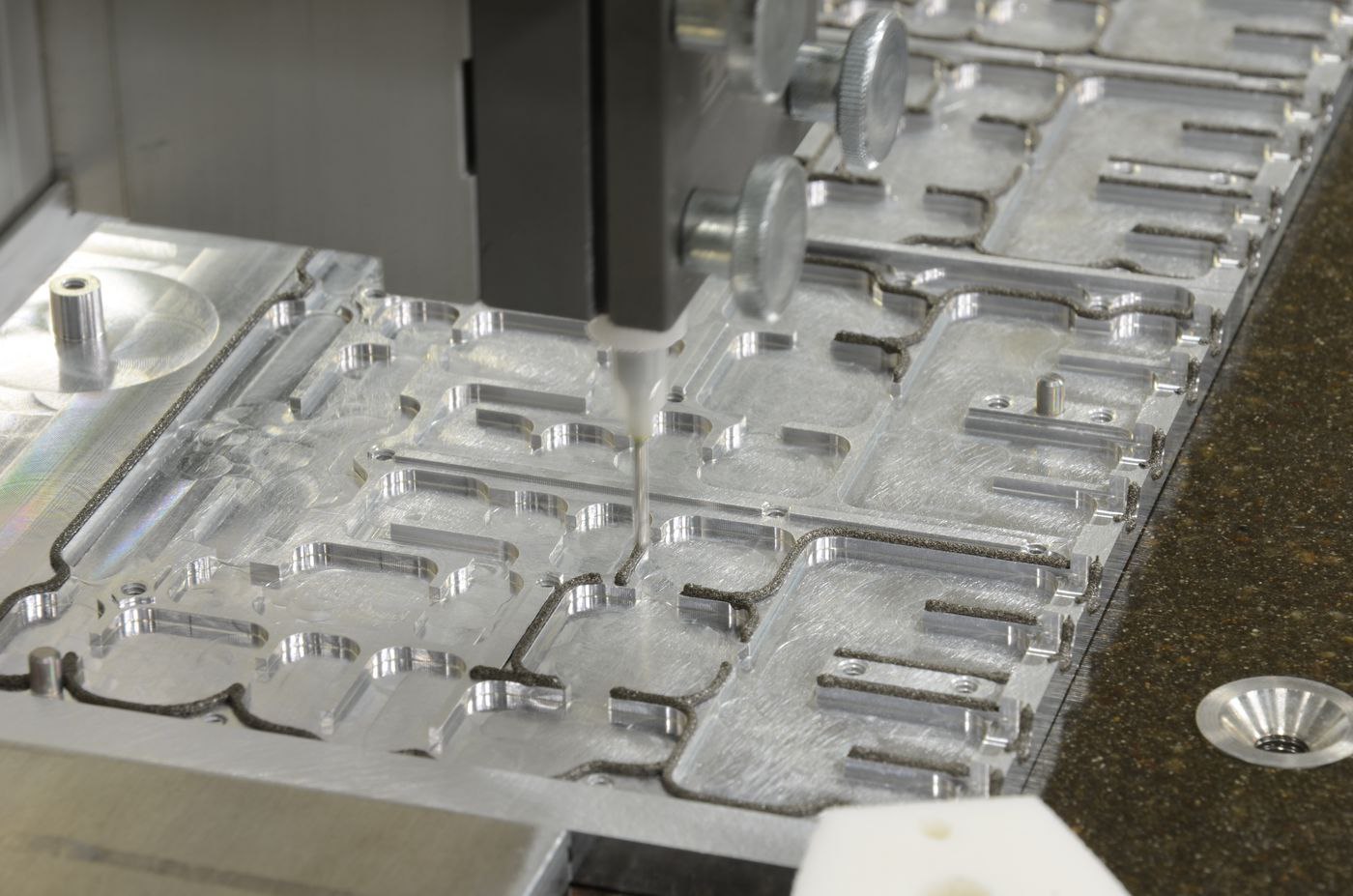
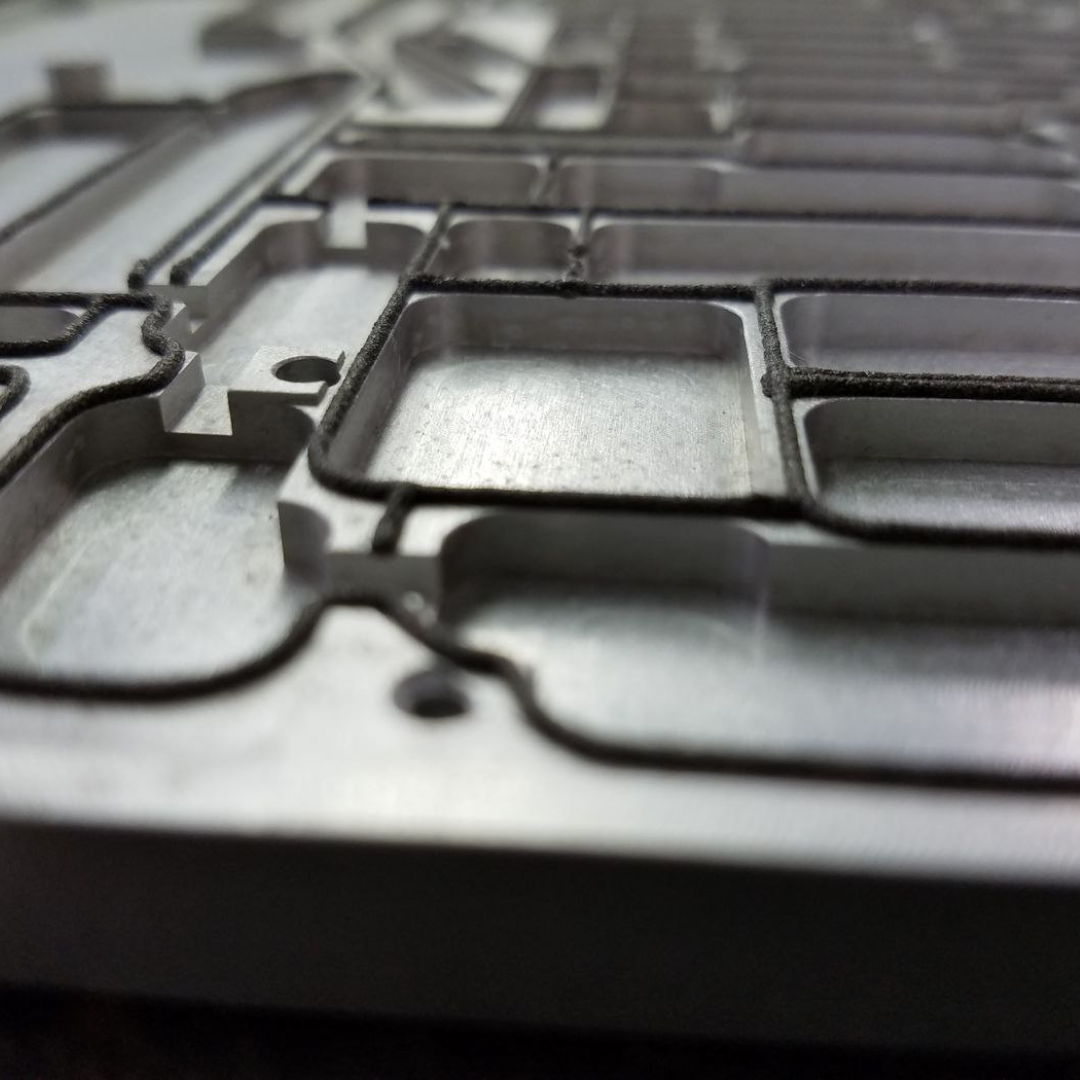
FIP gaskets are dispensed directly onto the machined housing using CNC-controlled dispensing equipment. The gasket material — a conductive silicone or fluorosilicone compound — is placed exactly where it is needed, in the exact bead profile required. Once cured, the gasket is permanently bonded to the housing, creating a turnkey sub-assembly that is ready for integration.
The key advantages of FIP for missile defense applications include:
- Precision placement on complex geometries: FIP can follow intricate compartmentalized bead paths that would be impractical to achieve with die-cut gaskets.
- Consistent bead profile: Automated dispensing produces repeatable bead height and width, critical for achieving uniform compression and SE.
- Reduced assembly steps: The gasket is bonded to the housing, eliminating the need for manual gasket installation during system integration.
- Material efficiency: FIP uses material only where needed, reducing waste compared to die-cutting from sheet stock.
Bead Path Design Considerations
The bead path — the route the FIP gasket follows across the housing surface — is one of the most important design decisions in a missile defense RF shield. A well-designed bead path ensures electromagnetic continuity around every compartment. Our EMI gasket design guide covers bead path principles across a broader range of applications.
The ideal bead path isolates all internal compartments from each other and from the external environment. It should form a continuous conductive loop around each compartment boundary. The number of starts and stops in the dispense path affects both the cost and the quality of the gasket, so minimizing them is a key design goal.
Designers should keep these FIP-specific considerations in mind:
- Start/stop zones: The first and last 3 mm of any start or stop zone may exhibit height variations of --30% to +45% from the nominal bead height. Locate start and stop points away from critical sealing areas whenever possible.
- T-joints and intersections: Where bead paths cross or branch, similar height and width variations can occur. Careful path planning can minimize the number of T-joints.
- Wall proximity: FIP gasket material cures toward all surfaces it contacts. A bead dispensed too close to an adjacent wall will not form a symmetrical cross-section. Allow a minimum of 1.6 mm (0.063") clearance on each side of the bead width.
- Minimum segment length: Very short gasket segments (under 6 mm) are difficult to dispense with consistent height and profile. Avoid them where possible.
Bead Specifications and Tolerances
FIP bead height is the most critical dimensional specification. Height determines compression and, consequently, the electrical contact pressure that drives shielding effectiveness. Width is a secondary specification that is largely driven by the height due to the free-forming nature of the dispensing process.
Standard FIP bead tolerances from Modus Advanced's manufacturing capabilities are as follows:
Parameter | Standard Tolerance | Notes |
Bead height (standard) | ±0.15 mm (±0.006") | Standard across most FIP materials |
Bead height (Nolato TriShield, < 1 mm nominal) | ±0.10 mm | Tighter tolerance on smaller beads |
Bead height (Nolato TriShield, > 1 mm nominal) | ±0.15 mm | Standard tolerance |
Start/stop zone variation | –30% to +45% of nominal height | Within 3 mm of any start, stop, or T-joint |
True Partnership
Small Bead FIP: Breaking the Bead Size Boundaries of Form-In-Place Gaskets
As technology advances, electronics and devices are shrinking in size to accommodate more complex project designs–simply put, they require more technology in less space. It pays to have a manufacturing part who is willing to push the boundaries.
Explore MaterialsChapter 7
Start/stop zone variation --30% to +45% of nominal height Within 3 mm of any start, stop, or T-joint
Tighter bead tolerances are achievable through specialized fixturing, machine calibration, and process controls. This drives additional cost and lead time. The engineering team at Modus Advanced works with customers to determine the bead specifications that meet functional requirements without over-tolerancing — a practice that increases cost without improving performance.
Material Selection for FIP Gaskets
The four major FIP material manufacturers — Nolato, Parker Chomerics, Laird, and Momentive — each offer conductive compounds suitable for missile defense applications. Material selection depends on the required SE, operating temperature range, chemical compatibility, and specific bead size requirements.
- Parker Chomerics CHO-FORM: Widely used in defense applications. CHO-FORM materials offer a typical height-to-width ratio of 85% and a recommended bead compression of 20--30%, with a maximum of 40%.
- Nolato TriShield: Designed as narrow gaskets to reduce cost and compression force. TriShield materials are well-suited for the thin-walled, densely compartmentalized enclosures common in missile electronics. Gasket width is specified as a maximum value, with the recommendation to focus design specifications on gasket height.
- Laird FIP materials: Bead aspect ratios vary with desired height and paste formulation. The maximum recommended bead height for a typical Laird material is 0.80 mm for a 1.0 mm nominal bead.
- Momentive: Offers conductive silicone compounds for FIP dispensing with formulations tailored to specific temperature and chemical resistance requirements.
The selection between these materials — and between the many formulations each manufacturer offers — should be driven by the specific SE, temperature, and chemical requirements of the application. An experienced FIP dispensing partner can guide this selection based on real-world experience with the materials.
.png?width=1024&height=768&name=Telecommunciations%20(1).png)
Case Study
Redefining the Traditional Supplier Relationship to Create a 10 Year Partnership
Learn how Modus has worked to create a long-term partnership with this DoD Telecommunications company.
See HowChapter 8
Testing, Compliance, and Qualification for Missile Defense RF Shielding
Missile defense RF shielding must be designed, tested, and qualified to a demanding set of military standards. Understanding these requirements early in the design process prevents costly redesigns later.
Applicable Military Standards
Several MIL-STDs govern the EMI/EMC performance of missile defense electronics. The following table outlines the most commonly applicable standards and their scope.
Standard | Scope | Key Test Methods / Requirements |
MIL-STD-461 | EMI/EMC for individual equipment | RE102 (radiated emissions), RS103 (radiated susceptibility), CE102 (conducted emissions) |
MIL-STD-464 | E3 requirements at system/platform level | Integrated electromagnetic environment; inter-system compatibility |
MIL-STD-810 | Environmental testing methods | Temperature, vibration, shock, humidity, altitude, salt fog |
MIL-STD-889 | Dissimilar metals | Galvanic corrosion prevention at metal-to-metal and metal-to-gasket interfaces |
Chapter 9
MIL-STD-889 Dissimilar metals Galvanic corrosion prevention at metal-to-metal and metal-to-gasket interfaces
MIL-STD-461 is the foundational standard that most RF engineers will work against directly. It defines conducted and radiated emissions and susceptibility limits across the frequency range of interest. MIL-STD-464 extends these requirements to the integrated platform level, addressing how multiple systems interact electromagnetically when installed together. For a deeper look at how these standards translate into manufacturing requirements, see our companion article on RF shielding for missile defense manufacturing compliance.
Shielding Effectiveness Testing
SE testing is typically performed per IEEE 299 or equivalent methods. This testing is especially critical for radar EMI shielding applications where even modest leakage can degrade receiver sensitivity. The test measures the attenuation of electromagnetic fields across the frequency range of interest, comparing field strength measurements with and without the shielded enclosure in place.
Test results are only as good as the test setup. Gasket compression, cover fastener torque, connector tightness, and cable shield terminations all affect measured SE. The test configuration must match the as-installed configuration of the shielding assembly. A shield that tests well on the bench can fail in the field if the gaskets are under-compressed or the fastener pattern is different from the test fixture.
Environmental Qualification
Shielding assemblies must maintain their SE performance after exposure to the full range of environmental stresses specified in the system's environmental qualification program. The following table summarizes the key environmental tests and their relevance to RF shielding integrity.
Shielding assemblies must maintain their SE performance after exposure to the full range of environmental stresses specified in the system's environmental qualification program. The following table summarizes the key environmental tests and their relevance to RF shielding integrity.
Environmental Test | MIL-STD-810 Method | Typical Conditions | Shielding Impact |
Temperature cycling | Method 503 | –55°C to 85°C (–67°F to 185°F) storage | Gasket compression set, adhesion degradation |
Random vibration | Method 514 | Transportation, captive carry, powered flight profiles | Gasket fretting, contact pressure loss |
Mechanical shock | Method 516 | Handling drops, pyrotechnic events, stage separation | Housing deformation, gasket displacement |
Humidity | Method 507 | Sustained high-humidity exposure | Gasket conductivity degradation, corrosion |
Salt fog | Method 509 | Accelerated corrosion testing | Interface corrosion, particularly for naval systems |
Specific temperature and vibration profiles vary by program. Naval missile defense systems will emphasize salt fog and humidity testing, while air-launched systems will see more demanding vibration and shock profiles. Ground-based radar platforms face their own unique environmental challenges — see our guide to environmental sealing for ground-based radar equipment for more on that topic. The key is verifying SE both before and after the complete sequence of environmental exposures — not after individual tests alone.
The gasket is often the weakest link in shielding performance after environmental exposure. Compression set, adhesion degradation, and corrosion at the gasket-housing interface are the most common failure mechanisms. Selecting the right gasket material and specifying appropriate surface treatments on the housing are the best ways to prevent these failures.
Related
What Happens During a DfM Review?
Get a full breakdown of how the Design for Manufacturability Review process works at Modus.
DfM ProcessChapter 10
Design for Manufacturability: RF Shields That Perform and Can Be Built
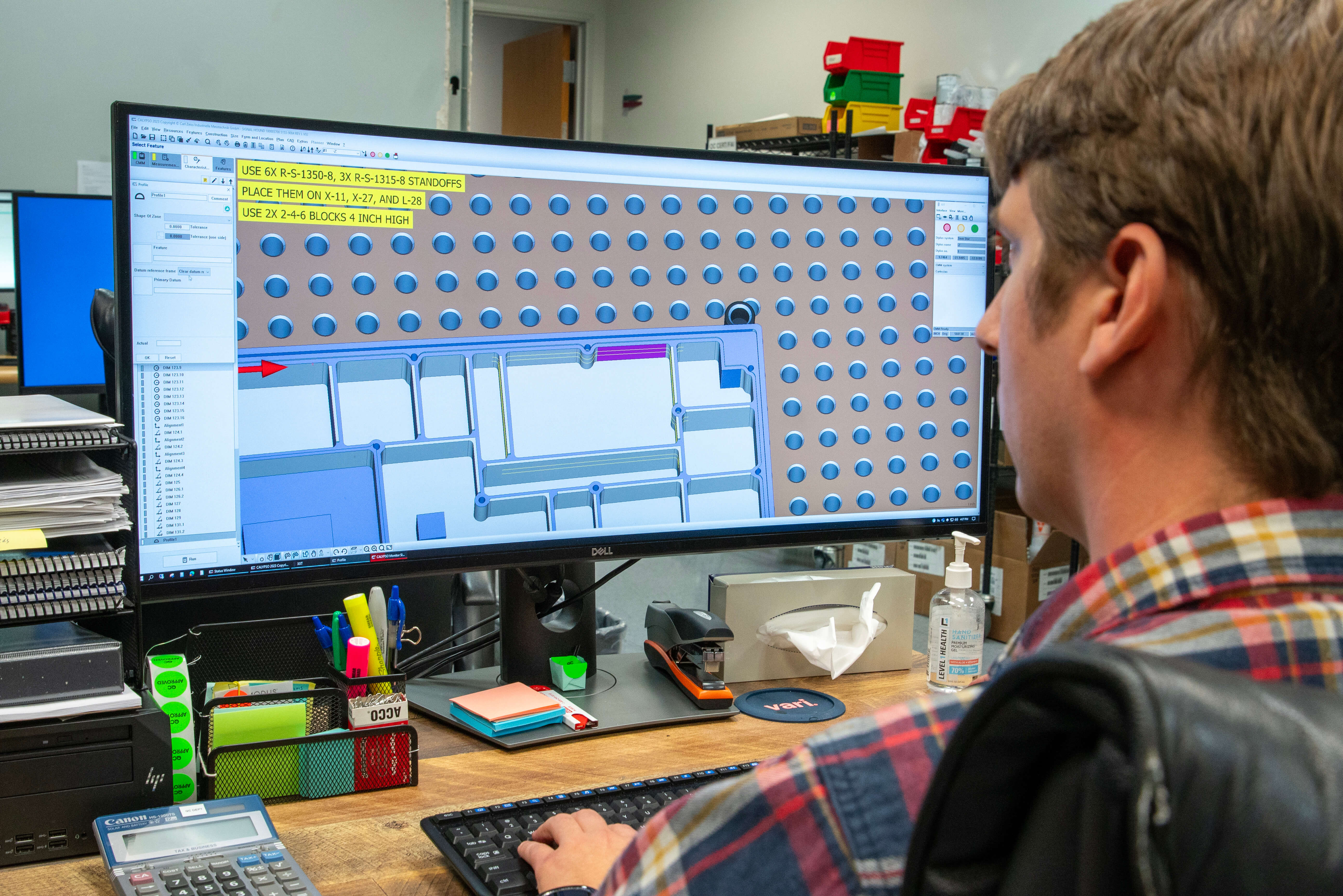
An RF shield that looks perfect in simulation but cannot be manufactured repeatably at scale is not a successful design. Design for manufacturability (DFM) is especially important for missile defense RF assemblies because the tolerances are tight, the volumes are moderate, and the consequences of a quality escape are severe. Learn more about our processes here.
Housing Design Considerations
CNC machining is the standard manufacturing method for missile defense RF enclosures. The design choices that drive shielding performance also affect machinability, cost, and lead time. Our DFM guide for CNC machined metal parts covers these trade-offs in depth.
Key DFM considerations for machined RF housings include:
- Wall thickness: Thinner walls provide less shielding and are more difficult to machine without distortion. A minimum wall thickness of 1.0 mm (0.040") is recommended for aluminum enclosures, though 1.5 mm (0.060") or greater is preferred for mechanical stability.
- Internal compartment depth: Deep, narrow pockets require long-reach tooling and slower feed rates. Aspect ratios (depth-to-width) above 4:1 significantly increase machining time and cost.
- Flatness: FIP gaskets require a flat mating surface to achieve consistent compression. Housing flatness is controlled during machining through proper fixturing. Parts that warp after machining — especially thin-walled designs — may require secondary flattening operations, which add cost.
- Corner radii: Internal corners must have a minimum radius matching the end mill diameter. Sharp internal corners cannot be machined and will require additional setups or EDM (electrical discharge machining) to achieve.
Engaging with a manufacturing partner early in the design process — during preliminary design review rather than after critical design review — helps identify and resolve these issues before they become costly change orders.
Gasket Channel and Groove Design
Some RF shield designs incorporate grooves or channels to locate and retain the FIP gasket. This approach can improve gasket alignment and protect the gasket from handling damage during assembly, but it introduces additional DFM considerations.
FIP gasket materials are designed to function in a compressed application. Filling a groove entirely with material will affect the material's compression characteristics and could result in a defective gasket. The groove dimensions must be carefully matched to the dispensed bead size to allow proper compression without overfill.
Dispensing FIP gaskets on a flat surface rather than in a groove is generally recommended. Flat-surface dispensing simplifies the machining operation (eliminating the groove feature) and gives the gasket material more freedom to form a consistent cross-section. If a groove is required by the design, work closely with the FIP dispensing partner to ensure the groove dimensions are compatible with the selected material's wet and cured bead dimensions.
Integration of Absorbers and Thermal Materials
Many missile defense RF shield assemblies require the addition of RF absorber materials and/or thermal interface materials (TIMs) inside the enclosure. These materials are typically cut from sheet stock and bonded or mechanically retained in the housing. Space-based interceptor platforms introduce additional thermal constraints — our guide to thermal management for space-based defense systems covers those requirements in detail.
Manufacturing these components under the same roof as the machined housing and FIP gasket — a vertically integrated approach — reduces risk in several ways. It eliminates shipping between vendors, ensures consistent quality standards across all components, and allows the manufacturing engineering team to optimize the assembly sequence for the best results.
Chapter 11
Why the Right Manufacturing Partner Matters
Missile defense RF shielding sits at the intersection of precision machining, advanced materials, electromagnetic design, and military quality systems. Finding a manufacturing partner with depth across all of these areas is essential.
The Case for Vertical Integration
A missile defense RF shield assembly typically involves four or more distinct manufacturing processes: CNC machining of the housing, application of conductive plating or coating, FIP gasket dispensing, and assembly of absorber or thermal materials. The traditional approach sends the part to a different vendor for each step — a process that can stretch lead times to two to three months and introduces risk at every handoff.
Modus Advanced's SigShield™ process consolidates these steps under one roof. CNC machining, plating and coating, FIP dispensing, and material assembly are performed as a single, integrated workflow. This eliminates inter-vendor shipping, reduces the number of quality handoffs, and can cut weeks from typical RF shield procurement lead times.
The benefits extend beyond lead time. A single source of accountability means one quality system, one engineering team, and one point of contact. If a design change is needed — and in missile defense, design changes happen — it can be implemented across all processes without coordinating between multiple vendors.
Engineering Expertise Matters
More than 10% of the Modus Advanced staff are engineers. That engineering depth enables meaningful DFM feedback during the design phase — feedback that can prevent costly redesigns and improve shielding performance.
This engineering support is especially valuable during the transition from prototype to production. Prototype RF shields may perform well in testing but prove difficult or expensive to manufacture repeatably at production volumes. Engineers who understand both the electromagnetic requirements and the manufacturing process can bridge that gap with practical design recommendations.
Quality Systems and Security Compliance
Missile defense programs demand manufacturing partners with robust quality management systems and appropriate security certifications. Modus Advanced holds AS9100 and ISO 9001 certifications, is ITAR registered, and is CMMC Level 2 certified.
AS9100 certification is particularly relevant for missile defense work because it goes beyond ISO 9001 to include aerospace-specific requirements for configuration management, risk management, and first article inspection. These processes are designed to catch quality issues before they reach the field — where the stakes are highest.
ITAR registration ensures that controlled technical data and defense articles are handled in compliance with U.S. export control regulations.
CMMC Level 2 certification verifies that cybersecurity practices protect controlled unclassified information (CUI) throughout the manufacturing process — an increasingly critical requirement as adversaries target defense supply chains.
From Prototype Through Production
Missile defense programs typically move through rapid prototyping, design validation, low-rate initial production (LRIP), and full-rate production (FRP). Each phase has different manufacturing priorities, and having a partner that can support the entire lifecycle avoids the cost and risk of qualifying a new supplier at each transition.
Speed matters most during prototyping. The ability to machine a housing, dispense a gasket, and deliver a testable sub-assembly in days rather than weeks can keep a development schedule on track. During production, consistency, repeatability, and cost optimization take priority. A manufacturing partner with the engineering team and process infrastructure to support both ends of this spectrum is a significant program asset.
Chapter 12
Designing Your Missile Defense RF Shield: A Practical Reference
This section distills the guidance in this article into an actionable reference for RF engineers beginning or reviewing a missile defense shielding design. The table below maps each design phase to its critical actions and the applicable standards or specifications.
Design Phase | Critical Actions | Key Standard / Specification |
Electromagnetic requirements | Define SE per compartment; identify threat frequencies including EW/ECM | MIL-STD-461 (RE102, RS103) |
Compartmentalization | Isolate transmit, receive, and digital sections; evaluate need for absorbers | IEEE 299 (SE verification) |
Housing material selection | Balance weight, machinability, SE, and corrosion resistance | MIL-STD-889 (dissimilar metals) |
Surface treatment specification | Specify conductive plating at all gasket mating surfaces | MIL-DTL-5541 (chromate conversion) |
FIP bead path design | Continuous conductive loops; minimize starts, stops, and T-joints | Material manufacturer specifications |
FIP bead tolerancing | Specify height as primary dimension; allow for start/stop zone variation | ±0.15 mm (±0.006") standard tolerance |
Environmental qualification | Verify SE after temperature cycling, vibration, shock, and humidity | MIL-STD-810 (Methods 503, 514, 516, 507) |
Manufacturing partner selection | Verify AS9100, ISO 9001, ITAR, CMMC Level 2; evaluate vertical integration | AS9100, ITAR, CMMC Level 2 |
Electromagnetic Design Priorities
The electromagnetic design phase establishes the foundation for every other decision. Defining SE requirements for each compartment — based on the sensitivity of the protected circuit and the expected threat environment — is the first and most important step.
Frequency range identification should cover both internal EMI sources and external threats, including EW/ECM frequencies. Compartments housing sensitive receivers or high-Q cavities should be evaluated for RF absorber integration. Conductive platings should be specified at all gasket mating surfaces, as bare aluminum may not provide sufficient interface conductivity for high-SE applications.
Mechanical and Environmental Priorities
Housing material, surface flatness, temperature range, chemical compatibility, and vibration survivability must all be addressed in parallel. Gasket mating surfaces need flatness tolerances compatible with the selected FIP bead height and compression range.
The full temperature range — including aerodynamic heating effects — must inform gasket and absorber material selection. Chemical compatibility with all fluids and solvents in the system's environmental specification should be verified early, not after material procurement. Vibration qualification planning should start at the design phase, ensuring gasket materials and adhesion methods can survive the specified profile.
FIP Gasket and Procurement Priorities
FIP bead path design should isolate all compartments with continuous conductive loops, with start/stop zones located away from critical sealing areas. Bead height is the primary specification; width should be specified as a maximum value consistent with the free-forming dispensing process. Maintain a minimum of 1.6 mm (0.063") clearance on each side of the bead width from adjacent walls.
Engaging the manufacturing partner at preliminary design review — rather than after the design is locked — is the single most impactful step for reducing cost and schedule risk. Certifications including AS9100, ISO 9001, ITAR registration, and CMMC Level 2 should be baseline requirements for any missile defense manufacturing partner.
Chapter 13
Frequently Asked Questions About Missile Defense RF Shielding
What level of shielding effectiveness do missile defense electronics require?
Missile defense subsystems typically require 60--100+ dB of shielding effectiveness — significantly higher than the 20--40 dB common in commercial electronics. The exact requirement depends on the subsystem. Active radar seekers and fuzing electronics generally demand the highest SE levels, while secondary compartment dividers may require less. SE requirements are defined per MIL-STD-461 and verified through testing per IEEE 299.
Why are FIP gaskets preferred over die-cut gaskets for missile electronics?
FIP gaskets are dispensed directly onto the machined housing using CNC-controlled equipment. This allows precise placement on the small, intricate, compartmentalized geometries typical of missile guidance electronics. Die-cut gaskets work well for simple enclosures, but missile housings feature complex internal compartment walls that require bead paths well-suited to automated FIP dispensing. Standard FIP bead height tolerance is ±0.15 mm (±0.006").
What materials provide the highest shielding effectiveness for conductive gaskets?
Silver-copper filled conductive gaskets provide the highest shielding effectiveness, with SE values exceeding 100 dB achievable. Silver-aluminum and silver-nickel fillers also deliver high SE. Fluorosilicone is the preferred base elastomer when gaskets will be exposed to jet fuel or hydrocarbon solvents. Standard silicone is adequate for most sealed-compartment applications.
Which military standards govern missile defense RF shielding?
The primary standards include MIL-STD-461 (EMI/EMC testing for individual equipment), MIL-STD-464 (system-level electromagnetic environmental effects), MIL-STD-810 (environmental testing including temperature, vibration, and shock), and MIL-STD-889 (dissimilar metals and galvanic corrosion prevention). Shielding effectiveness measurement typically follows IEEE 299.
How does vertical integration reduce lead time for RF shield assemblies?
Traditional RF shield procurement sends the part to separate vendors for machining, plating, gasket dispensing, and absorber assembly — a process that typically takes two to three months. A vertically integrated manufacturer performs all processes under one roof. Modus Advanced's SigShield™ process eliminates inter-vendor shipping, reduces quality handoffs, and provides single-source accountability under one quality system.
What certifications should a missile defense RF shielding manufacturer hold?
A manufacturing partner should hold AS9100 (aerospace quality management), ISO 9001 (quality management systems), ITAR registration (export control compliance), and CMMC Level 2 certification (cybersecurity for controlled unclassified information). These certifications ensure the partner can handle controlled defense articles, maintain traceability, and protect sensitive technical data.
Chapter 14
Accelerating Missile Defense Innovation with Modus Advanced
Missile defense programs protect lives. The RF shielding that ensures those systems function under fire is a critical link in that chain. Designing and manufacturing shielded assemblies that perform in the most demanding electromagnetic and environmental conditions requires deep expertise in materials, machining, FIP dispensing, and military quality systems — all working together.
Modus Advanced brings all of that under one roof. Our SigShield™ process delivers complete RF shield sub-assemblies — from CNC-machined housing through plating, FIP gasket dispensing, and absorber assembly — in a single, vertically integrated workflow. Our engineering team provides DFM feedback that improves your design and our quality systems — backed by AS9100, ISO 9001, ITAR, and CMMC Level 2 certifications — ensure that every part meets the standard the mission demands.
We've built a deep understanding of the defense industry through years of work on guided missile systems, advanced radar platforms, electronic warfare systems, and missile defense systems. We hire former military personnel for key roles to ensure we can strategically support our customers' needs. And we measure our success the same way you measure yours — in parts that work when it matters most.
When lives depend on your innovation, choose a manufacturing partner who understands what's at stake. Contact Modus Advanced today to discuss your missile defense RF shielding requirements.
Chapter 15
Glossary of Key Terms
- Attenuation: The reduction in strength of an electromagnetic signal as it passes through a material or shield, measured in decibels (dB).
- Compression set: The permanent deformation of a gasket material after being compressed for a period of time. High compression set means the gasket does not fully recover, which can reduce seal force and SE over time.
- ECM (Electronic Countermeasures): Techniques used to deliberately interfere with enemy radar, communication, or guidance systems using RF energy.
- EMI (Electromagnetic Interference): Unwanted electromagnetic energy that disrupts the operation of electronic circuits. Can be conducted (through wires) or radiated (through space).
- EW (Electronic Warfare): Military operations involving the use of the electromagnetic spectrum to attack or defend against enemy systems.
- Faraday cage: An enclosure formed by conductive material that blocks external electromagnetic fields from entering — and internal fields from escaping.
- FIP (Form-in-Place): A gasket manufacturing method in which liquid gasket material is dispensed directly onto a part using CNC-controlled equipment, then cured in place.
- RFI (Radio Frequency Interference): A subset of EMI specifically involving signals in the radio frequency portion of the electromagnetic spectrum.
- SE (Shielding Effectiveness): A measure of how well a shield attenuates electromagnetic energy, expressed in decibels (dB). Higher SE means better shielding.
Don't have time to read the entire guide now?
We'll email you a downloadable PDF version of the guide and you can read it later.
Get Started
Speak to an Engineer Today
Don’t take our word for it. Reach out and speak to one of our engineers about your part today and see the benefits for yourself. We strive to turn all quotes around 48 hours or less to get your part moving as quickly as possible.
Submit a Design