
Key Points
- Hypersonic avionics operate in thermal extremes: RF enclosures must maintain electromagnetic integrity across temperature ranges from cryogenic pre-launch conditions through sustained flight temperatures exceeding 538°C (1,000°F) on internal components — and well beyond 1,648°C (3,000°F) at leading edges.
- High-speed vehicle EMI management is exponentially harder at Mach 5+: Propulsion systems, ionized plasma sheaths, and dense electronics packaging create layered electromagnetic interference challenges that conventional shielding approaches cannot address.
- Material selection drives mission success or failure: Standard aluminum alloys lose structural integrity above 204°C (400°F), making high-temperature alloy selection and thermal expansion management critical design decisions for extreme temperature RF shielding.
- Gasket and seal performance determines system reliability: Form-in-place (FIP) gaskets must maintain conductivity and compression across rapid thermal cycling, and material selection must account for both shielding effectiveness and survivability.
- Vertical integration reduces risk in classified programs: Consolidating CNC machining, FIP dispensing, coatings, and RF absorber assembly under a single CMMC-certified roof eliminates multi-vendor coordination delays and reduces security exposure.
When the Air Itself Becomes the Enemy
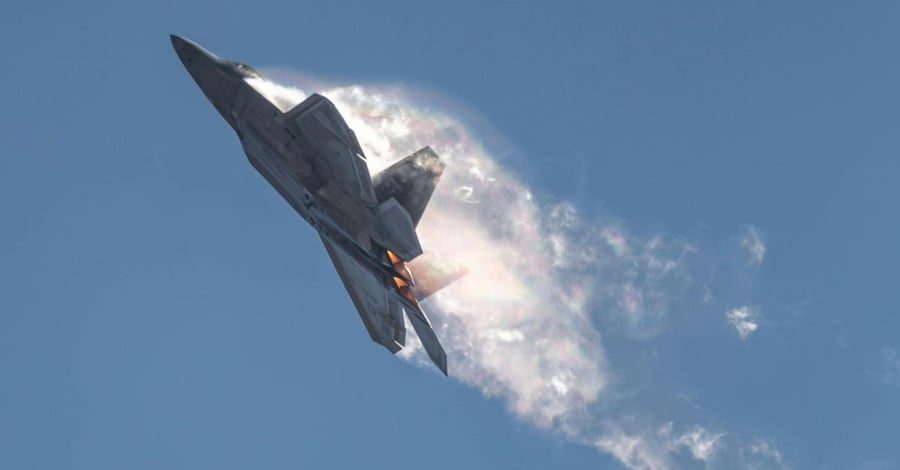
Designing RF enclosures for hypersonic avionics means engineering for an environment where the atmosphere itself attacks your electronics. Vehicles traveling above Mach 5 compress atmospheric air into superheated plasma, generating thermal loads that would destroy components designed for conventional aerospace environments. The avionics systems guiding these vehicles — navigation, communication, seekers, and electronic warfare suites — must function flawlessly inside this inferno.
RF enclosure design for hypersonic avionics is one of the most demanding challenges in modern defense engineering. Every material, every seal, every gasket interface must perform across temperature gradients that shift from cryogenic to white-hot in seconds. A single gap in electromagnetic shielding can mean a lost signal, a jammed sensor, or a failed mission. The same principles that govern RF shielding for missile defense and radar systems apply here — amplified by the extreme aerothermal environment.
This article covers the environmental challenges, material considerations, and design strategies that drive successful extreme temperature RF shielding for hypersonic vehicle avionics.
The Hypersonic Environment: What Your Enclosure Is Up Against
Hypersonic flight creates a convergence of environmental stressors that no single design variable can address in isolation. Engineers must account for simultaneous thermal, mechanical, and electromagnetic threats — each one severe enough to cause system failure on its own.
Extreme Thermal Loads
Aerodynamic heating at Mach 5+ generates surface temperatures that approach the melting points of structural metals. Leading edges can exceed 1,648°C (3,000°F), while internal electronics face sustained temperatures above 538°C (1,000°F) across most vehicle surfaces.
These temperatures create two distinct problems for RF enclosures. The housing material itself must retain structural integrity and dimensional stability under extreme heat. The gaskets and seals within the enclosure must maintain conductivity and compression despite thermal expansion mismatches between mating surfaces. Understanding high-temperature gasket durability in extreme military environments is essential to selecting materials that survive these conditions.
Vibration and Mechanical Shock
Hypersonic propulsion systems — particularly scramjet engines — generate intense vibration spectra that propagate through the vehicle structure. Atmospheric turbulence at hypersonic speeds adds broadband mechanical excitation. Some structures warp by as much as 30 mm (1.2") during flight due to thermal expansion alone.
RF enclosures must maintain seal integrity through this combined thermal-mechanical loading. Gasket compression must remain within specification even as the housing geometry shifts. Fastener preload, tolerance stackups, and material creep rates all become critical variables. The challenges mirror those addressed in vibration and shock isolation for interceptor electronics, where high-G environments place similar demands on seal and mounting systems.
High-Speed Vehicle EMI Sources and Shielding Challenges
High-speed vehicle EMI management is fundamentally different from conventional aerospace shielding. Three factors compound the challenge.
The following table summarizes the primary EMI sources unique to hypersonic flight environments:
EMI Source | Frequency Range | Shielding Challenge |
Scramjet propulsion noise | Broadband, DC to GHz | High-amplitude, structure-borne conducted emissions |
Plasma sheath (ionized boundary layer) | Variable, dependent on velocity and altitude | Attenuates and distorts RF signals passing through the vehicle skin |
Dense avionics packaging | MHz to GHz | Crosstalk between tightly spaced systems in thermally constrained volumes |
Electronic warfare countermeasures | Mission-specific | Must shield friendly systems while allowing intentional emissions |
The plasma sheath is particularly problematic. At hypersonic velocities, the ionized gas layer surrounding the vehicle can attenuate or completely block RF communications and sensor signals. Enclosure designs must account for signal path management through this barrier — an RF window or radome that works at subsonic speeds may become opaque at Mach 7\.
Material Selection: The Foundation of Extreme Temperature RF Shielding
Material selection for hypersonic RF enclosures is a multi-variable optimization problem. The housing, gaskets, coatings, and absorbers must all perform individually and together across the full flight envelope.
Housing Materials for Hypersonic Avionics Enclosures
Standard 6061-T6 aluminum — the workhorse of conventional RF enclosures — loses meaningful structural integrity above 204°C (400°F). Hypersonic avionics housings demand materials that retain strength, dimensional stability, and thermal conductivity at far higher temperatures.
Engineers typically evaluate the following alloy families for hypersonic RF enclosure housings:
- Titanium alloys (Ti-6Al-4V): Excellent strength-to-weight ratio with useful service temperatures up to approximately 315°C (600°F). Good machinability with proper tooling. Common for enclosures in thermally managed internal bays.
- Nickel-based superalloys (Inconel 625, 718): Service temperatures exceeding 700°C (1,292°F) with high corrosion resistance. More challenging to machine, requiring experienced CNC programming and tooling strategies.
- High-temperature stainless steels (17-4 PH, 15-5 PH): Moderate temperature capability up to approximately 315°C (600°F) with good machinability. Cost-effective for enclosures in partially shielded thermal zones.
- Beryllium-copper alloys: Excellent thermal and electrical conductivity with moderate high-temperature performance. Often used for RF-critical interfaces where conductivity must be preserved.
The table below compares key properties relevant to RF enclosure housing selection:
Property | Ti-6Al-4V | Inconel 718 | 17-4 PH SS | 6061-T6 Al (Reference) |
Max Service Temp | \~315°C (600°F) | \~700°C (1,292°F) | \~315°C (600°F) | \~204°C (400°F) |
Density | 4.43 g/cm³ | 8.19 g/cm³ | 7.78 g/cm³ | 2.70 g/cm³ |
Thermal Conductivity | 6.7 W/m·K | 11.4 W/m·K | 17.9 W/m·K | 167 W/m·K |
Electrical Conductivity | Low | Low | Moderate | High |
Relative Machinability | Moderate | Difficult | Good | Excellent |
Note that electrical conductivity directly impacts shielding effectiveness. Lower-conductivity housing materials may require conductive coatings or specialized plating to achieve required attenuation levels — a design tradeoff that must be evaluated early in the enclosure design process. Our guidance for designing an EMI shielding enclosure covers these tradeoffs in greater detail for engineers earlier in the design cycle.
Gasket and Seal Materials
Gaskets are where hypersonic RF enclosures most often fail. The seal interface between housing halves or access panels must simultaneously provide electromagnetic shielding, environmental sealing, and mechanical compliance — all while surviving extreme thermal cycling.
Standard silicone-based conductive elastomers — materials like Parker Chomerics CHO-FORM — perform well in conventional aerospace temperature ranges. Hypersonic applications push these materials toward or beyond their operational limits. Engineers designing for orbital or exoatmospheric mission profiles should also review space-qualified conductive gasket material selection, where outgassing and vacuum compatibility add further constraints.
Critical gasket selection considerations for extreme temperature RF shielding include the following:
- Temperature rating vs. actual exposure: Verify that the material's rated temperature accounts for sustained exposure, not peak survival. Many elastomers degrade rapidly under sustained heat even below their rated maximum.
- Conductivity retention at temperature: Some conductive fillers (silver-coated particles, for example) maintain conductivity well at elevated temperatures, while others degrade. Shielding effectiveness testing should be performed across the full operational temperature range.
- Compression set resistance: Elastomers at elevated temperatures exhibit accelerated compression set. A gasket that provides 60 dB of shielding at room temperature may drop to 40 dB after thermal cycling if the material takes a permanent set.
- CTE mismatch management: The gasket must accommodate differential expansion between mating housing components. FIP gaskets offer an advantage here — the dispensed bead conforms to the housing geometry and can be engineered to accommodate predictable expansion patterns.
Coatings and Surface Treatments
Conductive coatings bridge the gap between housing material selection and shielding performance requirements. Nickel, silver, and copper plating can transform a high-strength but low-conductivity superalloy housing into an effective RF enclosure.
Coating selection for hypersonic enclosures must account for oxidation resistance at temperature. Standard electroless nickel plating provides good conductivity and moderate oxidation resistance. Silver plating offers superior conductivity but may require a protective overcoat to prevent tarnishing and degradation at elevated temperatures.
Design Strategies for Hypersonic RF Enclosures
Designing an RF enclosure that survives hypersonic flight requires a systems-level approach. Individual material choices matter, but the interactions between housing, gasket, coating, and absorber determine whether the enclosure performs as an integrated system.
Thermal Management Integration
The RF enclosure cannot be designed in isolation from the vehicle's thermal management system. Heat soak from aerodynamic heating will eventually reach the avionics bay, and the enclosure design must account for how that thermal energy is managed. Space-based defense platforms face analogous challenges, and the material strategies outlined in our thermal management guide for space-based defense systems apply to thermally protected avionics bays as well.
Thermal interface materials (TIMs) applied between the electronics and the enclosure housing serve a dual purpose. They conduct waste heat away from sensitive components while also filling air gaps that could otherwise compromise shielding effectiveness. Material selection must balance thermal conductivity with electrical properties — some high-conductivity TIMs are also electrically conductive, which can create unintended ground paths or coupling.
Gasket Geometry and FIP Advantages
Form-in-place gasket dispensing offers specific advantages for hypersonic RF enclosures that die-cut or molded gaskets cannot match.
FIP gaskets are dispensed directly onto the machined housing, conforming precisely to the mating surface geometry. This eliminates the tolerance stackup between a separately manufactured gasket and the housing — a critical advantage when thermal expansion changes the housing dimensions during flight. Standard FIP bead tolerances of ±0.15 mm (±0.006") provide the precision needed for reliable shielding effectiveness at EMI-critical interfaces.
The dispensed bead also fills micro-imperfections in the machined housing surface. CNC-machined housings with standard tolerances of ±0.25 mm (±0.010") may have surface variations at the gasket interface. FIP material flows into these variations during dispensing and curing, creating a more intimate contact surface than a pre-formed gasket pressed against the same surface. Our 6 tips for designing a form-in-place EMI gasket covers bead geometry, wall width, and compression best practices in depth.
Design engineers should consider the following FIP-specific guidelines for hypersonic enclosures:
- Compression stop features: Incorporate mechanical stops in the housing design to prevent gasket overcompression during fastener torque application. Each FIP material specifies a maximum compression percentage — exceeding this threshold can rupture the bead and create shielding gaps.
- Start/stop zone management: FIP beads have height and width variations of \-30% to \+45% from nominal in start/stop zones (typically 3 mm in each direction around start, stop, and T-joint locations). Enclosure designs should position these zones away from EMI-critical sealing areas.
- Wall width requirements: The housing flange onto which FIP material is dispensed must meet minimum width specifications. CHO-FORM materials can be applied to flanges as narrow as 0.76 mm (0.030"), but hypersonic thermal expansion may require wider flanges to maintain gasket-to-wall positioning at temperature.
Managing Thermal Expansion in the Enclosure Assembly
Differential thermal expansion between housing components, gaskets, and fasteners creates dynamic tolerance conditions throughout the flight profile. An enclosure that seals perfectly at room temperature may develop gaps at 500°C (932°F) if the mating components expand at different rates.
Design mitigation strategies include selecting fastener materials with CTE values matched to the housing alloy, incorporating compliance features (flexures or spring-loaded interfaces) in the enclosure lid or cover, and using FIP gaskets with sufficient compression range to accommodate predictable dimensional changes. Engineers designing custom molded rubber seals and vibration isolators for these assemblies should account for the same CTE-driven dimensional shifts when specifying durometer and compression ranges.
Finite element thermal-structural analysis should model the enclosure assembly across the full mission temperature profile. This analysis identifies where gasket compression drops below minimum shielding requirements and where housing distortion may create new gap paths. These results drive design iteration before hardware is ever cut.
Quality and Security: Non-Negotiable Requirements for Hypersonic Avionics Programs
Hypersonic avionics programs operate within some of the most stringent quality and security frameworks in the defense industry. Manufacturing partners must demonstrate both capability and compliance.
Quality Systems
AS9100 certification provides the quality management foundation for aerospace component manufacturing. ISO 9001 underpins this with broadly recognized quality system standards. These certifications represent a commitment to the service members who will ultimately depend on the avionics systems these enclosures protect.
For CNC-machined RF enclosure housings, standard tolerances of ±0.25 mm (±0.010") meet most hypersonic avionics requirements. Tighter tolerances are achievable through advanced fixturing and tooling strategies, though this increases both lead time and cost.
Engineers should maintain standard tolerances unless the design specifically requires tighter control — particularly at gasket mating surfaces where FIP dispensing can accommodate normal machining variation.
Security Compliance
Hypersonic weapons programs are classified programs. Manufacturing partners must hold ITAR registration and maintain CMMC Level 2 certification to handle controlled unclassified information (CUI) associated with these programs. DFARS compliance establishes the contractual security framework throughout the supply chain.
Reducing the number of vendors who handle classified or controlled technical data reduces security exposure. A vertically integrated manufacturing partner who performs CNC machining, plating, FIP dispensing, and absorber assembly under a single security umbrella eliminates the data transfer risks inherent in multi-vendor supply chains.
Accelerating Hypersonic Avionics Development with Vertical Integration
Hypersonic weapons programs are among the Department of Defense's highest-priority technology investments. Development timelines are compressed, and the engineering challenges are immense. The manufacturing supply chain must keep pace.
Modus Advanced's SigShield™ process consolidates the four primary RF shield manufacturing steps — CNC machining of the metal housing, application of platings or coatings, form-in-place gasket dispensing, and assembly of converted absorber or thermal materials — under a single roof. This vertically integrated approach shaves weeks off traditional multi-vendor RF shield procurement timelines. Our article on component manufacturing for hypersonic missile systems details how this integrated approach addresses the full range of Mach 5+ manufacturing challenges.
More than 10% of our staff are engineers, and they engage directly with your design team. Early design for manufacturability (DFM) feedback on enclosure geometry, wall thicknesses, gasket flange design, and tolerance requirements can prevent costly redesigns later in development. When your program timeline is measured in months rather than years, that early collaboration matters.
Our AS9100, ISO 9001, ITAR, and CMMC Level 2 certifications provide the quality and security infrastructure that hypersonic programs demand. Every enclosure is manufactured, inspected, and shipped from our U.S.-based facilities — because when the mission is protecting national security, supply chain integrity is not optional.
Frequently Asked Questions About Hypersonic RF Enclosures
What temperatures must RF enclosures survive in hypersonic flight?
Hypersonic vehicles experience extreme thermal gradients depending on the location within the vehicle structure. Leading edges can exceed 1,648°C (3,000°F), while internal avionics bays face sustained temperatures above 538°C (1,000°F). RF enclosures protecting avionics must maintain dimensional stability and shielding effectiveness across this full range, which eliminates standard aluminum alloys and requires high-temperature superalloys, titanium, or specialty stainless steels.
Why do standard RF shielding materials fail at hypersonic speeds?
Standard 6061-T6 aluminum loses structural integrity above 204°C (400°F), and conventional silicone-based conductive elastomer gaskets experience accelerated compression set and conductivity degradation at sustained high temperatures. The combined thermal, vibration, and electromagnetic stresses of Mach 5+ flight exceed the design limits of materials engineered for subsonic or supersonic aerospace applications.
What are the advantages of FIP gaskets for hypersonic RF enclosures?
Form-in-place gaskets are dispensed directly onto the machined housing, conforming to surface geometry with bead tolerances of ±0.15 mm (±0.006"). This eliminates tolerance stackup between separately manufactured gaskets and housings — critical when thermal expansion changes dimensions during flight. FIP gaskets also fill micro-imperfections in the machined surface, creating superior contact compared to die-cut or molded alternatives.
How does the plasma sheath affect RF shielding at hypersonic speeds?
The ionized gas layer (plasma sheath) that forms around a vehicle at hypersonic velocities can attenuate or completely block RF communications and sensor signals. Enclosure designers must account for this additional barrier when managing signal paths. An RF window or radome that provides adequate transparency at subsonic speeds may become effectively opaque at Mach 7, requiring specialized aperture materials and design approaches.
What certifications should a hypersonic RF enclosure manufacturer hold?
Hypersonic weapons programs require manufacturing partners with AS9100 aerospace quality certification, ISO 9001 quality management, ITAR registration for defense articles, and CMMC Level 2 certification for handling controlled unclassified information (CUI). DFARS compliance establishes the contractual security framework. Vertical integration under a single certified facility reduces security exposure across the supply chain.
Why does vertical integration matter for hypersonic avionics enclosures?
Hypersonic RF enclosures require multiple manufacturing processes — CNC machining, plating, FIP gasket dispensing, and absorber assembly. Managing these across separate vendors introduces coordination delays, shipping costs, quality handoff risks, and security exposure for classified programs. A vertically integrated partner consolidates these processes under one roof, reducing lead times while maintaining unified quality control and security compliance.
Your Hypersonic Avionics Deserve a Partner Who Understands the Stakes
Hypersonic vehicle avionics push every aspect of RF enclosure design to its limits. The thermal extremes, the vibration environments, the electromagnetic complexity — these challenges demand manufacturing partners with deep expertise in materials, processes, and defense program requirements.
Reach out to speak with one of our engineers about your hypersonic avionics enclosure requirements. We strive to turn all quotes around in 48 hours or less — because in hypersonic development, one day matters.