

What is THERM-A-GAP GEL 30?
THERM-A-GAP GEL 30 is a fully cured dispensable thermal gel from Parker Chomerics with 3.5 W/m-K thermal conductivity. This single-component thermal interface material requires no mixing or curing, arriving ready to dispense for immediate use in data center component manufacturing.
Modern data center infrastructure faces unprecedented thermal challenges. Artificial intelligence workloads, cloud computing demands, and high-performance computing applications push server hardware to generate more heat than traditional cooling approaches can manage efficiently.
Engineers designing data center equipment need thermal interface materials that deliver consistent performance while supporting the automated manufacturing processes required for production volumes. For a comprehensive overview of thermal management principles and material options, see our complete engineer's guide to thermal management covering materials and manufacturing processes.
This guide covers THERM-A-GAP GEL 30 specifications, data center applications, design considerations, and manufacturing integration benefits. We'll explore why this material has become the preferred solution for processor cooling, memory module thermal management, and solid-state drive applications in modern server architectures.

Read the full guide to THERM-A-GAP materials here.
Essential Background Reading:
- Complete Engineer's Guide to Thermal Management: Comprehensive overview of thermal management principles and material options
- Essential Guide to Thermal Management: Foundational knowledge for evaluating thermal interface solutions
- Thermal Interface Materials Selection Guide: Decision framework for choosing the right TIM for your application
- Parker Chomerics Thermal Material Guide: Overview of Parker Chomerics thermal interface product portfolio
Understanding Thermal Gel Technology for Data Centers
Thermal interface materials bridge microscopic air gaps between heat-generating components and heat sinks. Air conducts heat poorly at approximately 0.026 W/m-K, which means even small gaps create significant thermal resistance that can lead to component throttling or failure. Our essential guide to thermal management provides foundational knowledge for engineers evaluating thermal interface solutions.
Thermal gels fill these gaps with thermally conductive material that maintains position during thermal cycling and mechanical shock. Unlike thermal greases that can pump out or migrate over time, fully cured gels like THERM-A-GAP GEL 30 maintain consistent thermal performance throughout the product lifecycle.
The fully cured designation means the material arrives ready to dispense with no mixing required. This eliminates process complexity while ensuring reliable thermal transfer in applications ranging from enterprise servers to high-density storage systems.
THERM-A-GAP GEL 30 Technical Specifications
Physical and Thermal Properties
Property | Value | Test Method |
Thermal Conductivity | 3.5 W/m-K | ASTM D5470 |
Heat Capacity | 1 J/g-K | ASTM E1269 |
Operating Temperature Range | -55°C to 200°C (-67°F to 392°F) | Chomerics |
Minimum Bond Line Thickness | 0.10 mm (0.004") | Chomerics |
Specific Gravity | 3.1 | ASTM D792 |
Flow Rate (30cc syringe, 2.54 mm orifice, 621 kPa) | 20 g/min | Chomerics |
Electrical Properties
Property | Value | Test Method |
Dielectric Strength | 8.0 kVac/mm (200 Vac/mil) | ASTM D149 |
Volume Resistivity | 10¹⁴ ohm-cm | ASTM D257 |
Dielectric Constant @ 1,000 kHz | 7.0 | ASTM D150 |
Dissipation Factor @ 1,000 kHz | 0.002 | Chomerics |
Related Content:
- THERM-A-GAP GEL 75 Material Guide: Higher thermal conductivity option (7.5 W/m-K) for demanding applications
- THERM-A-GAP GEL 37 Guide: Alternative 3.7 W/m-K thermal gel for intermediate requirements
- THERM-A-GAP PAD 30 Guide: Pre-cut pad alternative when automated dispensing isn't optimal
- Thermal Gap Pad Compression Optimization: Understanding compression force requirements for thermal interface performance
- Thermal Contact Resistance Solutions: Engineering approaches for minimizing thermal resistance at interfaces
Regulatory Compliance
Specification | Status | Standard |
Flammability Rating | V-0 | UL 94 |
RoHS Compliance | Yes | Chomerics Certification |
Outgassing (TML/CVCM) | 0.15% / 0.05% | ASTM E595 |
The outgassing specifications prove critical for data center applications. Low total mass loss and collected volatile condensable materials values indicate THERM-A-GAP GEL 30 will not contaminate sensitive optical components in high-speed transceivers or degrade nearby electronic assemblies.
Data Center Applications
Processor and GPU Thermal Interfaces
Modern server processors generate substantial heat loads concentrated in small footprints. The thermal interface between processor die and heat sink must minimize thermal resistance while accommodating component height variations that can exceed 0.25 mm (0.010") across multi-chip modules.
THERM-A-GAP GEL 30 excels in processor cooling applications. The ultra-low compression force deflects easily without stressing sensitive semiconductor packages, while variable bond line thickness capability accommodates manufacturing tolerances inherent in advanced server designs. Engineers can specify this material with confidence knowing it will protect processors generating 200+ watts of thermal dissipation.
Memory Module Thermal Management
High-bandwidth memory generates significant heat during sustained operations. Data center servers typically mount memory modules vertically, requiring thermal interface materials that resist gravity-induced flow while maintaining thermal contact across multiple thermal cycles.
The fully cured nature of THERM-A-GAP GEL 30 prevents material migration during operation. This gel maintains its dispensed position throughout the product lifecycle — a critical characteristic for applications where repositioning would require complete system disassembly and service interruption.
Solid State Drive Cooling
Enterprise SSDs face demanding thermal environments within server chassis. Sustained write operations can push NAND flash temperatures beyond optimal operating ranges without adequate thermal management, leading to performance throttling and reduced lifespan.
THERM-A-GAP GEL 30 provides effective heat transfer from SSD controller chips and memory packages to chassis thermal solutions. The material's high tack surface maintains contact without mechanical fasteners, simplifying drive replacement procedures during routine maintenance or capacity upgrades.
High-Speed Optical Transceiver Thermal Management
Fiber optic transceivers in data center switches and servers require precise thermal management. These compact modules generate concentrated heat loads while maintaining strict optical alignment requirements that prohibit excessive mechanical stress.
The minimum bond line thickness of 0.10 mm (0.004") accommodates tight mechanical tolerances in transceiver designs. Combined with automation-compatible dispensing characteristics, THERM-A-GAP GEL 30 supports the high production volumes typical of data center networking equipment manufacturing.
Design Considerations
Gap Analysis and Material Selection
The thermal interface gap — the distance between heat source and heat sink — determines appropriate material selection and application method. THERM-A-GAP GEL 30 accommodates gap thicknesses from 0.10 mm (0.004") to several millimeters while maintaining low thermal impedance.
Designers should account for manufacturing tolerances, component flatness variations, and assembly stack-up when specifying gap dimensions. The material's conformability handles typical variations without requiring precision machining of mating surfaces, reducing manufacturing costs while maintaining thermal performance.
For applications requiring higher thermal conductivity, engineers may consider THERM-A-GAP GEL 75 with its 7.5 W/m-K rating for demanding data center thermal management applications. Applications with intermediate thermal requirements may benefit from THERM-A-GAP GEL 37, which offers 3.7 W/m-K thermal conductivity for data center cooling.
Compression Force Requirements
Sensitive components require thermal interface materials that provide effective heat transfer without excessive mechanical stress. Surface-mount packages and ball grid array devices are particularly vulnerable to compression-induced damage that can lead to solder joint cracking or component failure.
THERM-A-GAP GEL 30 delivers thermal performance at compression forces significantly lower than rigid thermal pads. This characteristic protects delicate components while maintaining the thermal path integrity essential for reliable operation in mission-critical data center equipment. For applications where pre-cut pads better suit the assembly process, our guide to THERM-A-GAP PAD 30 explores this alternative thermal interface solution.
Dispensing Pattern Optimization
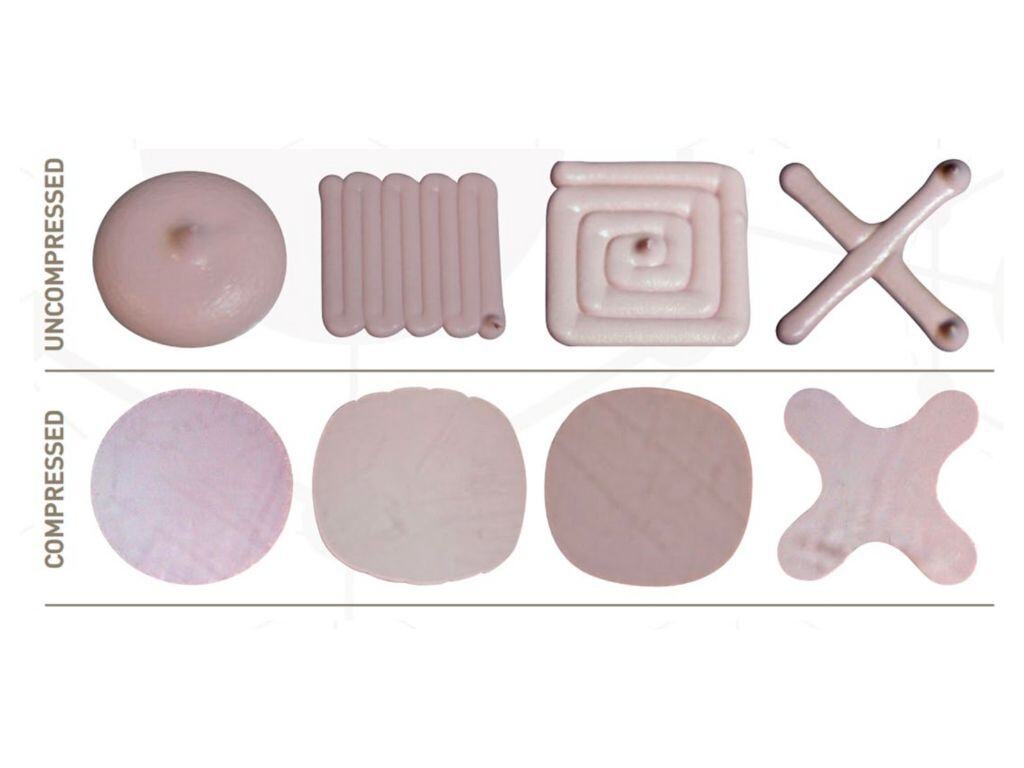
Automated dispensing systems apply thermal gels in programmed patterns that affect both thermal coverage and material usage efficiency. Common dispensing patterns for THERM-A-GAP GEL 30 include dot arrays for discrete components, serpentine lines for linear heat sources, and spiral deposits for circular footprints.
The optimal pattern depends on component geometry, gap thickness, and compression characteristics. Our engineering team provides guidance on pattern optimization for specific applications, ensuring effective thermal coverage while minimizing material waste and cycle time.
Manufacturing Integration Benefits
THERM-A-GAP GEL 30 offers significant advantages for data center equipment manufacturers focused on production efficiency and quality consistency.
The material integrates with standard automated dispensing systems used in electronics manufacturing. This compatibility eliminates manual pad placement operations that slow production lines and introduce operator-dependent variability. Manufacturers report reduced installation costs and improved consistency compared to hand-applied thermal interface materials. Understanding how to select the right build to print manufacturing partner becomes critical when scaling thermal gel dispensing operations.
Key Manufacturing Benefits
- Elimination of hand assembly: Automated dispensing replaces manual pad placement, reducing labor costs and improving repeatability
- Reduced inventory complexity: Single material handles multiple gap thicknesses across different component designs
- Process simplification: No mixing, no curing, no special handling requirements beyond basic material storage guidelines
- Consistent quality: Automated application reduces operator-dependent variability and improves first-pass yield rates
- High-volume compatibility: Dispensing speeds support production rate requirements for data center equipment manufacturing
Next Steps:
- Advanced Thermal Gel Dispensing Capabilities: Explore Modus automated dispensing systems and process capabilities
- Thermal Management DFM Best Practices: Design optimization strategies for manufacturing efficiency
- Understanding Thermal Impedance: Critical parameters for high-performance system thermal design
- Selecting a Build-to-Print Manufacturing Partner: Guide to scaling thermal gel dispensing operations
- Thermal Interface Material Data Sheets: Technical specifications for the complete thermal material portfolio
Thermal Gel Dispensing at Modus Advanced
Modus Advanced has invested significantly in thermal gel dispensing capabilities to support data center component manufacturers. Our automated dispensing systems apply THERM-A-GAP GEL 30 and similar thermal interface materials with the precision and repeatability that high-volume production demands.
Our engineering team — representing more than 10% of our staff — provides design for manufacturability feedback during the component development phase. This early engagement helps optimize thermal gel patterns, validate material specifications, and prevent costly redesigns during production ramp. We understand the thermal challenges specific to data center equipment and can recommend appropriate solutions for your application.
Modus holds AS9100 and ISO 9001 certifications, supporting customers with stringent quality requirements common in mission-critical infrastructure. Our quality systems ensure consistent thermal gel application across production volumes while maintaining the documentation traceability critical for data center equipment manufacturers.
Frequently Asked Questions
What is the thermal conductivity of THERM-A-GAP GEL 30?
THERM-A-GAP GEL 30 has a thermal conductivity of 3.5 W/m-K per ASTM D5470 testing methodology. This thermal conductivity rating provides effective heat transfer for most data center applications including processor cooling, memory module thermal management, and SSD temperature control.
Does THERM-A-GAP GEL 30 require curing after application?
No, THERM-A-GAP GEL 30 is fully cured and ready to use immediately after dispensing. The material requires no mixing or curing time, enabling same-day assembly completion and eliminating the process complexity associated with uncured thermal interface materials.
What is the minimum bond line thickness for THERM-A-GAP GEL 30?
THERM-A-GAP GEL 30 can be applied at bond line thicknesses as thin as 0.10 mm (0.004"). This capability accommodates the tight tolerances required in high-density computing equipment while maintaining effective thermal transfer.
Can THERM-A-GAP GEL 30 be used with automated dispensing systems?
Yes, THERM-A-GAP GEL 30 is specifically designed for compatibility with automated dispensing equipment. The material's flow characteristics enable consistent, repeatable dispensing patterns using standard electronics manufacturing equipment.
What temperature range does THERM-A-GAP GEL 30 support?
THERM-A-GAP GEL 30 operates reliably across a temperature range of \-55°C to 200°C (-67°F to 392°F). This operating temperature range covers the thermal environments found in data center equipment from cold start conditions to maximum processor operating temperatures.
How does THERM-A-GAP GEL 30 compare to thermal pads?
THERM-A-GAP GEL 30 offers several advantages over pre-cut thermal pads including the ability to accommodate variable gap thicknesses with a single material, automated application that reduces assembly time, and conformability to irregular surfaces without requiring precision machining. For high-performance pad applications, engineers may also evaluate THERM-A-GAP PAD 70TP with its 7.0 W/m-K thermal conductivity.
Is THERM-A-GAP GEL 30 electrically conductive?
No, THERM-A-GAP GEL 30 is electrically insulating with a volume resistivity of 10¹⁴ ohm-cm. This electrical insulation property eliminates the risk of creating electrical shorts while providing thermal conductivity for effective heat transfer.
Can THERM-A-GAP GEL 30 be reworked after application?
Yes, THERM-A-GAP GEL 30 features a high tack surface that maintains adhesion during normal operation while remaining reworkable for component replacement or service procedures. This reworkability simplifies field service operations in data center environments.
What dispensing patterns work best with THERM-A-GAP GEL 30?
Common dispensing patterns include dot arrays for discrete components, serpentine lines for linear heat sources, and spiral deposits for circular footprints. The optimal pattern depends on component geometry, gap thickness, and compression characteristics. Modus engineering can provide application-specific pattern recommendations.
Partner with Modus for Data Center Thermal Solutions
Data center equipment demands thermal management solutions that balance performance, reliability, and manufacturing efficiency. THERM-A-GAP GEL 30 delivers the thermal conductivity, process compatibility, and long-term stability these applications require.
See It In Action:
- Thermal Management: Prototype to Production: How engineering support accelerates thermal solution development
- 10 Things to Expect from Your Thermal Management Partner: Evaluation criteria for selecting a thermal manufacturing partner
- Thermal Management Applications: Industry-specific thermal solutions for aerospace, defense, and medical devices
- Thermal Management Resource Center: Complete library of thermal engineering resources and guides
Our team understands the urgency inherent in data center infrastructure development. We turn quotes around in 48 hours or less and support customers from prototype through production. When your thermal management solution needs to work the first time — and every time — partner with a manufacturing team that understands what's at stake.
Submit your design to our engineering team today. We'll help you optimize your thermal gel application for both performance and manufacturability, because one day matters.