
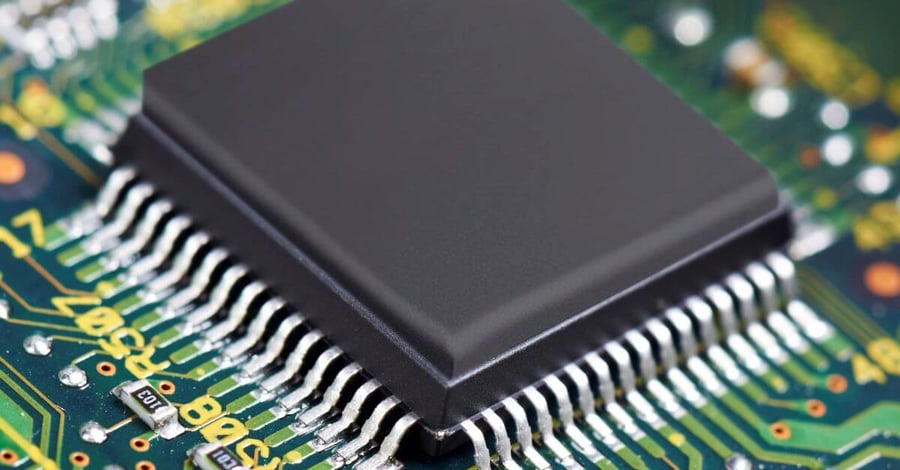

Read the full guide to THERM-A-GAP materials here.
What is Parker Chomerics PAD 70TP?
For data center engineers designing thermal management solutions, PAD 70TP addresses the growing challenge of heat dissipation in high-density server environments. Modern data centers pack more computing power into smaller form factors, creating concentrated thermal loads that demand efficient heat transfer materials. Our essential guide to thermal management provides foundational concepts for engineers navigating these challenges. PAD 70TP's thermal putty behavior allows it to permanently conform to surface variations, filling microscopic air gaps that would otherwise create thermal resistance.
This guide covers PAD 70TP material properties, data center application considerations, configuration options, converting requirements, and design guidance for thermal engineers implementing this material in server and storage systems.
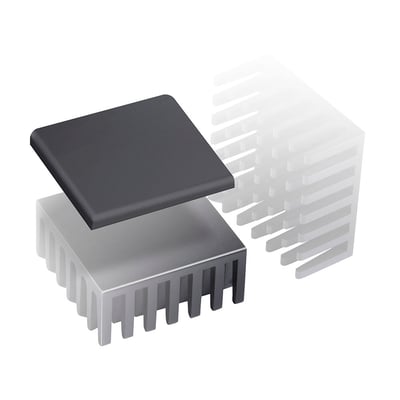
Understanding PAD 70TP Thermal Properties
The thermal characteristics of PAD 70TP position it as a high-performance option within the gap filler category for data center applications.
Thermal Performance Specifications
Property | Value | Test Method |
Thermal Conductivity | 7.0 W/m-K | ASTM D5470 |
Thermal Impedance (1mm thick, 10 psi) | 1.7 °C-cm²/W (0.27 °C-in²/W) | ASTM D5470 |
Operating Temperature Range | -55°C to 200°C (-67°F to 392°F) | Chomerics |
Heat Capacity | 0.72 J/g-K | ASTM E1269 |
Coefficient of Thermal Expansion | 150 ppm/K | ASTM E831 |
The 7.0 W/m-K thermal conductivity places PAD 70TP in the high-performance tier of gap filler materials. For applications requiring even higher thermal conductivity, engineers may consider PAD 80's 8.0 W/m-K thermal performance for demanding data center applications. This level of performance becomes particularly valuable in data center applications where thermal budgets are tight and component junction temperatures must remain within strict operational limits to ensure reliability.
Essential Background Reading:
- Essential Guide to Thermal Management: Foundational concepts for thermal interface material selection and heat transfer principles
- Thermal Interface Materials - Making the Right Choice: Overview of TIM categories and application-based selection criteria
- Parker Chomerics Thermal Material Guide: Complete overview of the THERM-A-GAP product family and specifications
- Thermal Gap Pad Compression Guide: Understanding compression behavior and deflection for optimal thermal contact
Mechanical Properties and Compression Behavior
The compression characteristics of PAD 70TP directly impact how it performs in assembled systems. The material's Shore 00 15 hardness — significantly softer than most conventional thermal pads — allows it to conform with minimal applied pressure.
Compression Pressure | Deflection Percentage |
34 kPa (5 psi) | 18% |
69 kPa (10 psi) | 42% |
172 kPa (25 psi) | 63% |
345 kPa (50 psi) | 73% |
Note: Deflection values measured on 3.0mm (0.120") thick unsupported samples per ASTM C165 modified.
These compression values have significant implications for design. The high deflection at low pressures means PAD 70TP can achieve intimate surface contact without the mechanical stress that harder materials would impose on components.
For applications where firmer materials are acceptable, PAD 30 offers a cost-effective alternative for data center thermal management. This characteristic makes it particularly suitable for applications involving sensitive BGA packages where excessive compression force could cause solder joint damage or component warpage.
Data Center Applications for PAD 70TP
Server and data center infrastructure present several thermal interface challenges where PAD 70TP's properties align well with application requirements.
Processor and GPU Thermal Management
Modern server processors and GPU accelerators generate substantial thermal loads that must be efficiently transferred to cooling systems. These components typically interface with heatsinks or cold plates through thermal interface materials. PAD 70TP's combination of high thermal conductivity and low compression force makes it suitable for these high-power-density applications.
The permanent conformability addresses a common challenge in processor thermal management. Component warpage — where the heat spreader surface isn't perfectly flat — can create air gaps that dramatically reduce thermal transfer efficiency. PAD 70TP's thermal putty behavior allows it to flow into these gaps during compression and maintain intimate contact across the entire interface throughout the system's operational lifetime.
Memory Module Cooling Solutions
High-bandwidth memory and DDR5 modules in AI and high-performance computing servers often require thermal interface solutions to prevent throttling under sustained workloads. Memory modules present a unique challenge because they feature multiple components at slightly different heights, and the packaging can be sensitive to compression forces that could damage solder joints or circuit boards.
PAD 70TP's low-stress conformability makes it well-suited for memory thermal management. The material can accommodate the small height variations between memory chips while maintaining effective thermal coupling to heatsinks or chassis surfaces without imposing damaging mechanical stress on sensitive components.
Solid-State Drive Thermal Solutions
Enterprise SSDs in data centers generate significant heat during sustained read/write operations that can affect both performance and longevity. These drives often require thermal interface materials between the drive controller, NAND flash packages, and the drive enclosure or chassis to maintain optimal operating temperatures.
The one-time assembly characteristic of PAD 70TP aligns well with SSD applications where drives are installed and remain in place for their operational lifetime. The material's conformability helps manage the varying component heights typical of SSD designs while its permanent deformation ensures consistent thermal performance without the need for periodic replacement.
PAD 70TP Material Configuration Options
PAD 70TP is available in several configurations to accommodate different assembly processes and application requirements in data center hardware manufacturing. Understanding what to expect from your Parker Chomerics distributor can help streamline your material procurement process.
Designation | Carrier Type | PSA Option | Minimum Thickness |
PAD70TP | None (unsupported) | No | 1.0mm (0.040") |
PAD70TPG | Woven glass, offset to one side | No | 0.76mm (0.030") |
PAD70TPF | Woven glass, centered | No | 1.5mm (0.060") |
PAD70TPA | Aluminum foil | Yes | 0.76mm (0.030") |
The carrier options serve different purposes in manufacturing and assembly workflows. The woven glass carriers (G and F designations) provide improved tear resistance and easier handling during die-cutting and pick-and-place operations in automated assembly environments. The G carrier's offset position creates a "clean break" feature that simplifies separation from carrier sheets during installation.
The aluminum foil carrier option (A designation) includes a pressure-sensitive adhesive on one side. This configuration enables pre-attachment to heatsinks or components before final assembly, which can streamline manufacturing processes in high-volume data center hardware production. Standard thickness range spans from 0.76mm to 5.08mm (0.030" to 0.200") in 0.25mm (0.010") increments, with thickness tolerance of ±10% or ±0.25mm (±0.010"), whichever is smaller.
Related Content:
- Thermal Pads vs. Thermal Form-in-Place: Compare gap pad materials with dispensable thermal solutions for your application
- Advanced Thermal Gel Dispensing: Explore dispensable thermal interface alternatives for complex geometries
- Precision Die-Cut Thermal Interface Materials: Custom converting solutions for demanding thermal applications
- Understanding Thermal Impedance: Critical design parameters for optimizing thermal interface performance
- Thermal Contact Resistance Solutions: Engineering approaches for maximizing heat transfer efficiency
Design Considerations for Data Center Engineers
Several factors should guide material selection and design decisions when evaluating PAD 70TP for data center thermal management applications.
Assembly Process Implications
The thermal putty behavior of PAD 70TP means the material is intended for one-time assembly applications. Engineers should consider whether their application may require component removal for service or upgrade cycles typical in data center operations. Applications involving removable components may be better served by conventional elastomeric gap pads that can be removed and replaced without permanent deformation. Our guide on choosing between thermal pads and thermal form-in-place solutions can help you evaluate the best approach for your specific requirements.
The material's high conformability also means that once compressed, PAD 70TP will not return to its original thickness. This behavior differs from traditional silicone gap pads that exhibit elastic recovery. Design reviews should account for this permanent deformation characteristic when planning for potential service scenarios or component replacement.
Electrical and Safety Compliance
PAD 70TP provides electrical isolation with the following characteristics critical for data center applications:
- Dielectric strength: 7.9 kV/mm (200 VAC/mil) per ASTM D149
- Volume resistivity: 10¹³ ohm-cm per ASTM D257
- Flammability rating: UL 94 V-0 (see UL File E482354)
- RoHS compliance: Yes
The UL 94 V-0 rating is particularly relevant for data center applications where fire safety requirements are stringent and code compliance is mandatory. Engineers should verify that this flammability rating meets their specific application and regulatory requirements for data center deployment. For applications requiring EMI shielding in addition to thermal management, our Parker Chomerics EMI shielding material guide covers conductive material options.
Outgassing Considerations for Enclosed Systems
For applications in enclosed or sealed systems common in data center server designs, outgassing performance is a critical consideration. PAD 70TP demonstrates low outgassing characteristics with 0.10% total mass loss (TML) and 0.03% collected volatile condensable materials (CVCM) per ASTM E595. These values indicate suitability for applications where volatile contamination must be minimized to protect sensitive electronics and optical components.
Converting PAD 70TP for Data Center Applications
Thermal gap pad materials like PAD 70TP require precision converting to create the specific shapes and configurations needed for production assemblies in data center hardware. The converting process transforms sheet stock into die-cut parts matched to component footprints and heatsink interfaces.
Material properties influence converting method selection. PAD 70TP's soft, putty-like consistency requires careful handling during cutting operations. The carrier options — particularly the woven glass carriers — improve material stability during converting and make the material more amenable to automated pick-and-place assembly in high-volume data center hardware production.
Converting considerations for PAD 70TP include:
- Die cutting: Suitable for production volumes where tooling investment is justified by part quantities
- CNC cutting: Effective for prototypes and lower volumes without tooling lead time
- Waterjet cutting: Option for thicker materials or complex geometries requiring tight tolerances
- Tolerance requirements: Standard converting tolerances apply per material thickness and geometry
Frequently Asked Questions About PAD 70TP
What makes PAD 70TP different from standard thermal gap pads?
PAD 70TP is a thermal putty material that permanently conforms when compressed, unlike standard elastomeric gap pads that maintain elastic recovery. This one-time assembly characteristic makes it ideal for static installations where components won't be removed, while the Shore 00 15 hardness provides ultra-low compression force to protect sensitive electronics.
Can PAD 70TP be used in high-temperature data center environments?
PAD 70TP operates reliably across a temperature range from -55°C to 200°C (-67°F to 392°F), accommodating the thermal conditions found in modern data centers. The material maintains its thermal performance and physical properties throughout this temperature range, making it suitable for components experiencing sustained high-power operation.
What compression pressure should be applied with PAD 70TP?
PAD 70TP achieves 42% deflection at 69 kPa (10 psi) compression pressure. The material is designed to conform effectively at low pressures, protecting sensitive components while establishing excellent thermal contact. Specific compression requirements depend on component geometry and thermal performance targets.
Is PAD 70TP compatible with automated assembly processes?
The woven glass carrier options (PAD70TPG and PAD70TPF) improve tear resistance and handling characteristics, making PAD 70TP suitable for automated pick-and-place assembly. The aluminum foil carrier version with pressure-sensitive adhesive (PAD70TPA) enables pre-attachment workflows in high-volume manufacturing environments.
How does PAD 70TP compare to thermal gels for data center applications?
PAD 70TP offers simplified handling compared to dispensable thermal gels since it comes in pre-formed sheets that can be die-cut to specific shapes. For applications where dispensable materials may be preferred, our guides on THERM-A-GAP GEL 37 for data center thermal management and THERM-A-GAP GEL 30 thermal interface solutions provide detailed comparisons. While thermal gels can accommodate very thin bondlines and complex geometries, PAD 70TP provides easier implementation for applications with defined gap dimensions and component footprints.
Next Steps:
- Thermal Management DFM Best Practices: Design for manufacturability guidelines for thermal interface implementation
- What to Expect from Your Parker Chomerics Distributor: Streamline your thermal material procurement process
- Thermal Interface Material Data Sheets: Access detailed specifications for thermal pad and gel materials
- Thermal Management Applications: Explore complete thermal solutions for your industry requirements
Partner with Modus Advanced for Thermal Interface Material Converting
Modus Advanced offers comprehensive converting capabilities for thermal interface materials including gap pads, phase change materials, and thermal gels used in data center thermal management solutions. Our engineering team provides material selection guidance to help you identify the right thermal solution for your specific data center hardware application requirements.
Our vertically integrated manufacturing processes enable us to support projects from prototype through production volumes. We work with materials from leading suppliers including Parker Chomerics, providing access to high-performance thermal interface materials like PAD 70TP converted to your specifications for data center server and storage applications.
Our quality systems — including AS9100 and ISO 9001 certifications — ensure the precision and consistency that mission-critical thermal management applications demand. More than 10% of our staff are engineers who understand the technical challenges you face in data center thermal design, from managing power densities in AI servers to meeting stringent reliability requirements for enterprise hardware.
See It In Action:
- Medical Device Manufacturing Case Study: How thermal interface materials enabled reliable device performance
- Building a 10-Year Strategic Partnership: Long-term thermal management solutions for telecommunications hardware
- Thermal Management Resource Center: Complete collection of thermal engineering resources and guides
- Complete Engineer's Guide to Thermal Management: Comprehensive thermal design reference for mission-critical applications
When thermal performance matters and component reliability is at stake in your data center designs, partner with a manufacturing team that understands what's at stake. Submit your design to our engineering team for material selection support and conversion quotes for your PAD 70TP thermal interface requirements.